

We invite you to this tour through just some of the typical instruments of Chile.
Zampoña: This Chilean folk wind instrument has its origins in the Quechua and Aymara cultures. It is made up of several hollow tubes, each one with its own sound, which depends on its length.
Charango: This Andean instrument is a variation of the Spanish guitar. Its body is made of the shell of a quirquincho and is made up of ten strings, grouped in pairs.
Bombo nortino: The protagonist of the dancing brotherhoods of the north of our country, such as La Tirana. Its sound box is usually made of wood or brass, and is struck by a mallet made of a piece of stick, whose head is made of wool covered in leather.
Quena: This Chilean instrument usually made of bamboo cane is the ideal accompaniment to the bass drum during cofradías. This instrument is similar to the traditional flute, but its main difference lies in the fact that it does not have a blowing channel.
Ocarina: This clay instrument has been losing its use due to the difficulties involved in making it. It is a wind instrument of relatively oval shape, but hollow inside, which has small holes in charge of producing the musical notes.
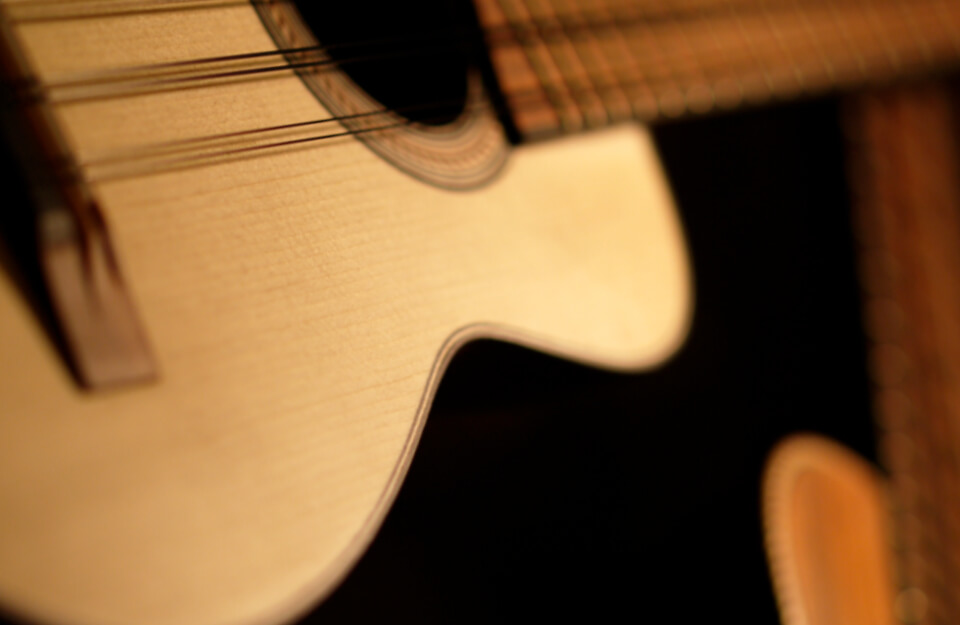
Bandurria: Chilean stringed instrument that resembles the guitar, but differs in size and shape, since it is considerably smaller and pear-shaped. It is a 12-stringed instrument that today is played by only a few players in the central part of the country.
Chilean Guitarrón: One of the only musical instruments of purely Chilean origin. This stringed instrument is notable for having a total of 25 musical strings, grouped in 5 groups of 3 to 6 strings each. An instrument that has been part of the traditions of our country since colonial times.
Cultrún: This percussion instrument is one of the most important in Mapuche culture, being used by the machi in various rituals. It is built with a tree trunk until it gives it a concave shape, and is then covered with animal hide. This instrument has great importance for the Mapuche people, since it is a representation of their cosmovision.
Trutruca: A relative of the trumpets, the trutruca also owes its origin to the Mapuche culture. It is made up of two parts, the body and the horn, made of a hollowed out colihue and a cow horn respectively. This Chilean folk instrument is mostly used for ceremonial events.
Bombo Chilote: Coming from the archipelago that gives it its name, this instrument is quite similar to its northern counterpart, with the difference that it is smaller in size. In addition, the drumheads surrounding the bass drum are made of cowhide.
Maea: Used by the Rapa Nui people, this folkloric instrument is made of hard and sonorous stones extracted from the sea. They are struck to the rhythm of the traditional dances and songs of this people.
Keho: Stone drum used by the Easter Islanders, who dug a hole where they were to place the instrument, on which they placed a hollow gourd and on top of it a slab stone. A singer or dancer is in charge of making this instrument sound by beating it with his feet.
Although these are some of the main instruments used in Chilean folklore, there are many other creations that have been part of our culture and history, such as the matraca, the triangulo, the chillador, the caja, the tarca, the guitar, the pandero, the accordion, the violin, the mandolin, the cacharaina, the tormento, the trompe, the cascahuilla, the pifilca, the rabel, the ukulele, the kauaha and the hio.
Photo by Manolo Blanco | Flickr